Formally verifying systolic array matrix multipliers with Aristotle
This post contains links to Aristotle formal verification reports for a systolic array matrix multiplier at sizes 4x4, 8x8, 16x16, 32x32 and 64x64 for FP16 values. You can read the properties that were formally verified in Lean 4, see the SystemVerilog code, and read the verification summary. The formal verification is a direct comparison against a high level functional specification of a pipelined systolic matrix multiplier. I think this kind of direct formal verification of a matrix multiplier like this against a fairly direct high level specification is unusual.
4x4
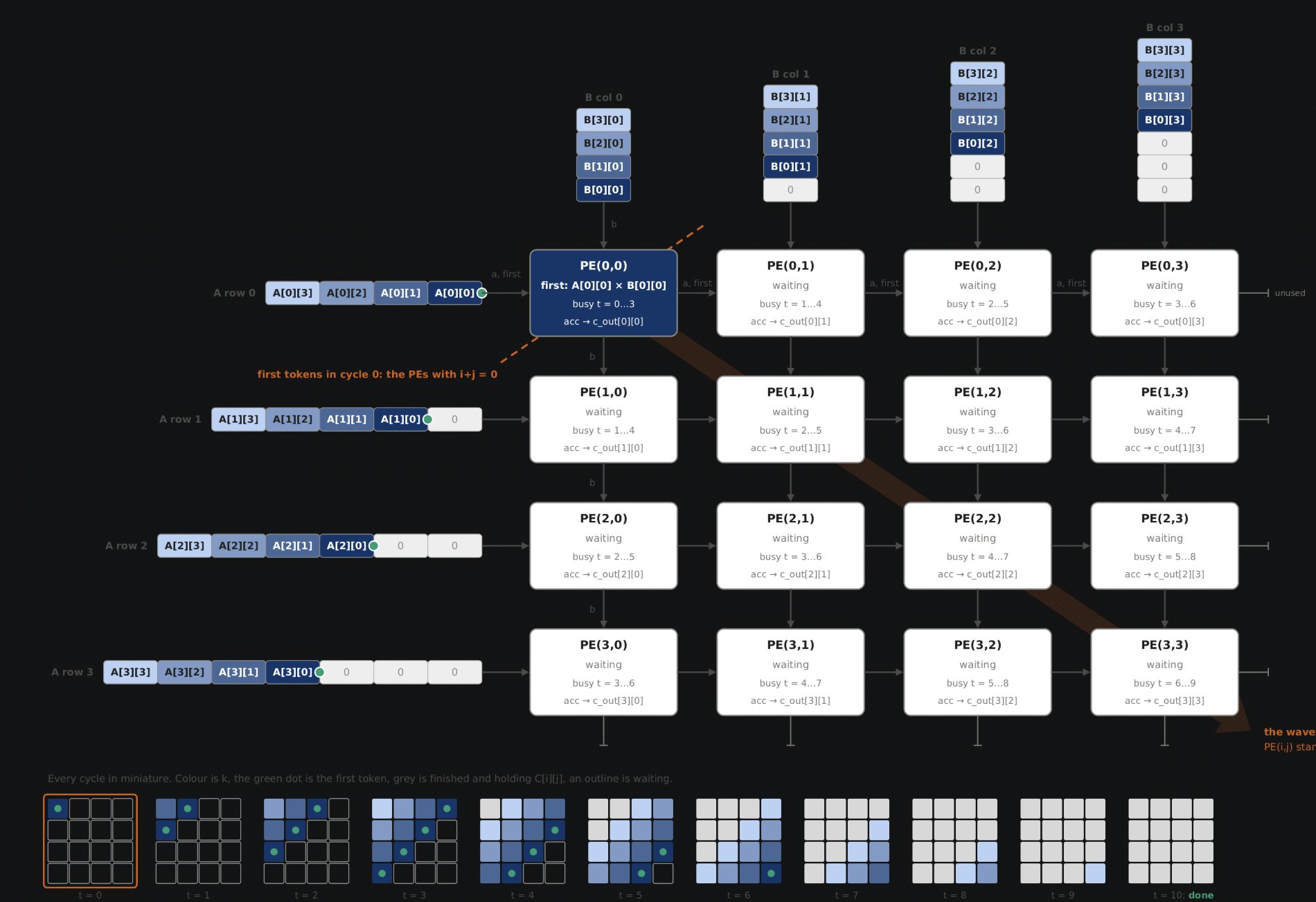
https://aristotle.harmonic.fun/projects/be0e5f8b-8206-4667-8773-3e8fd849fc7d
8x8
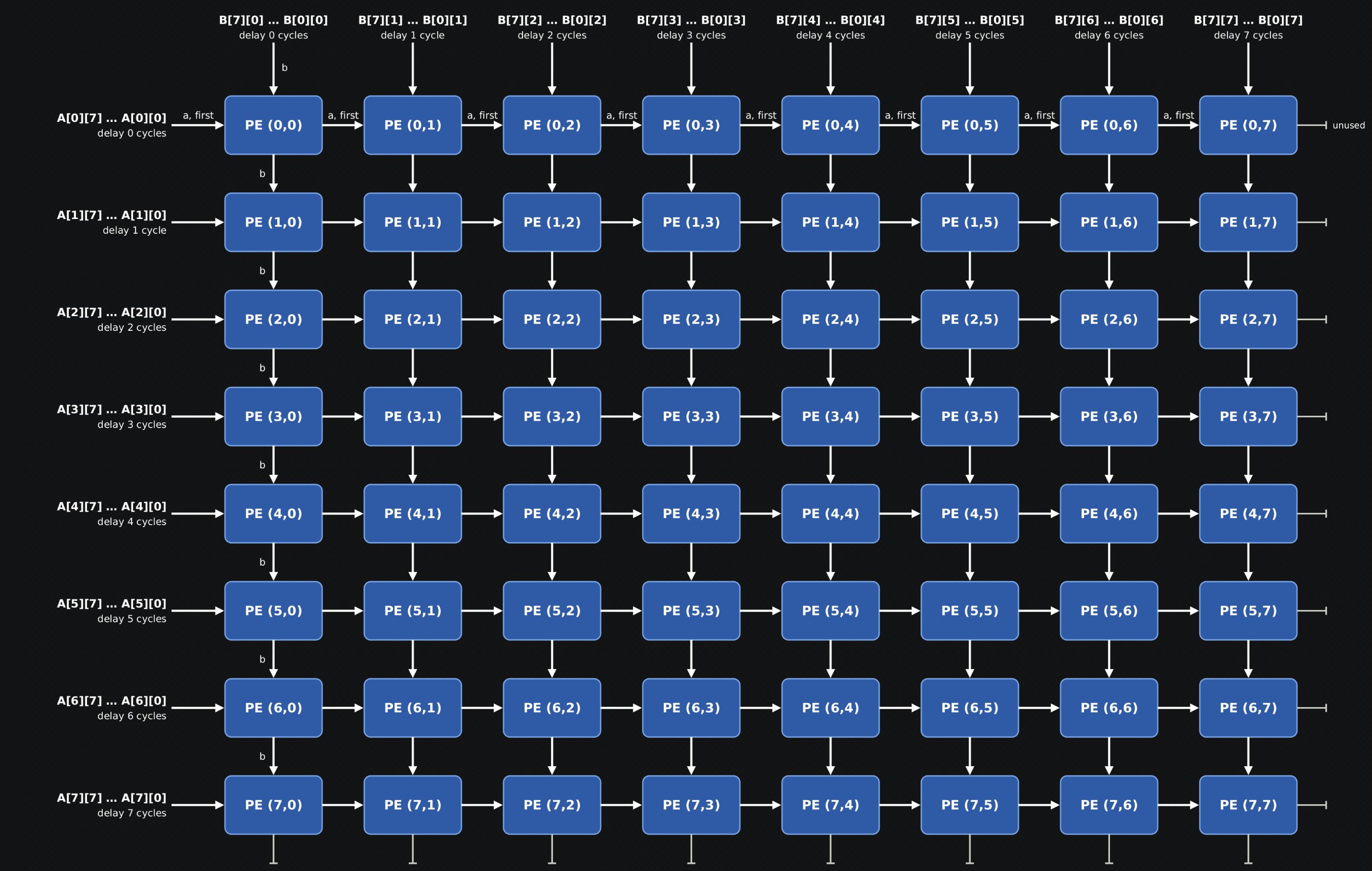
https://aristotle.harmonic.fun/projects/0a8ebdf7-e12e-4630-9005-235ce50b7b6b
16x16
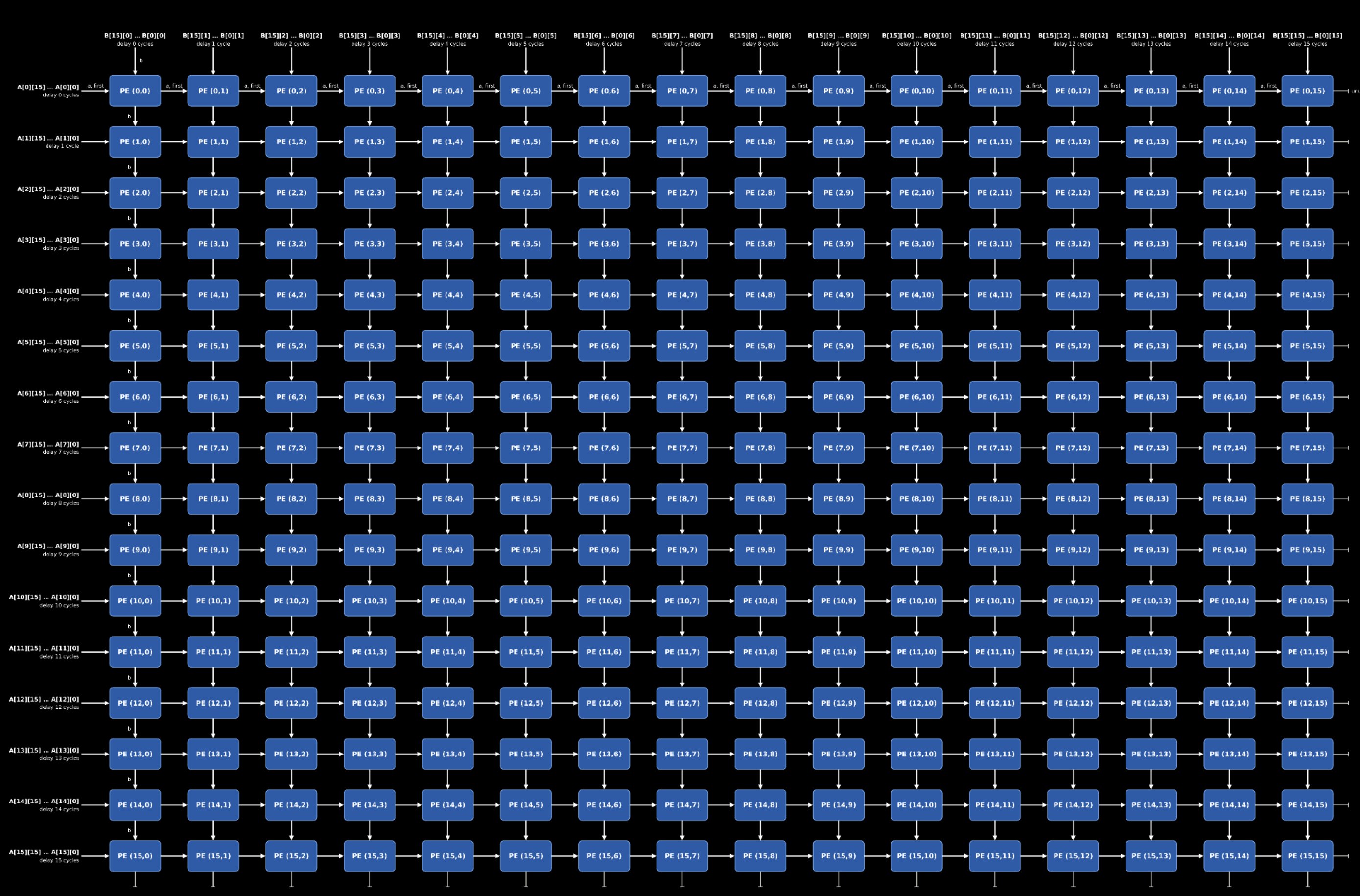
https://aristotle.harmonic.fun/projects/3a4c7300-3caa-464d-9e90-3dce986e4f44
32x32
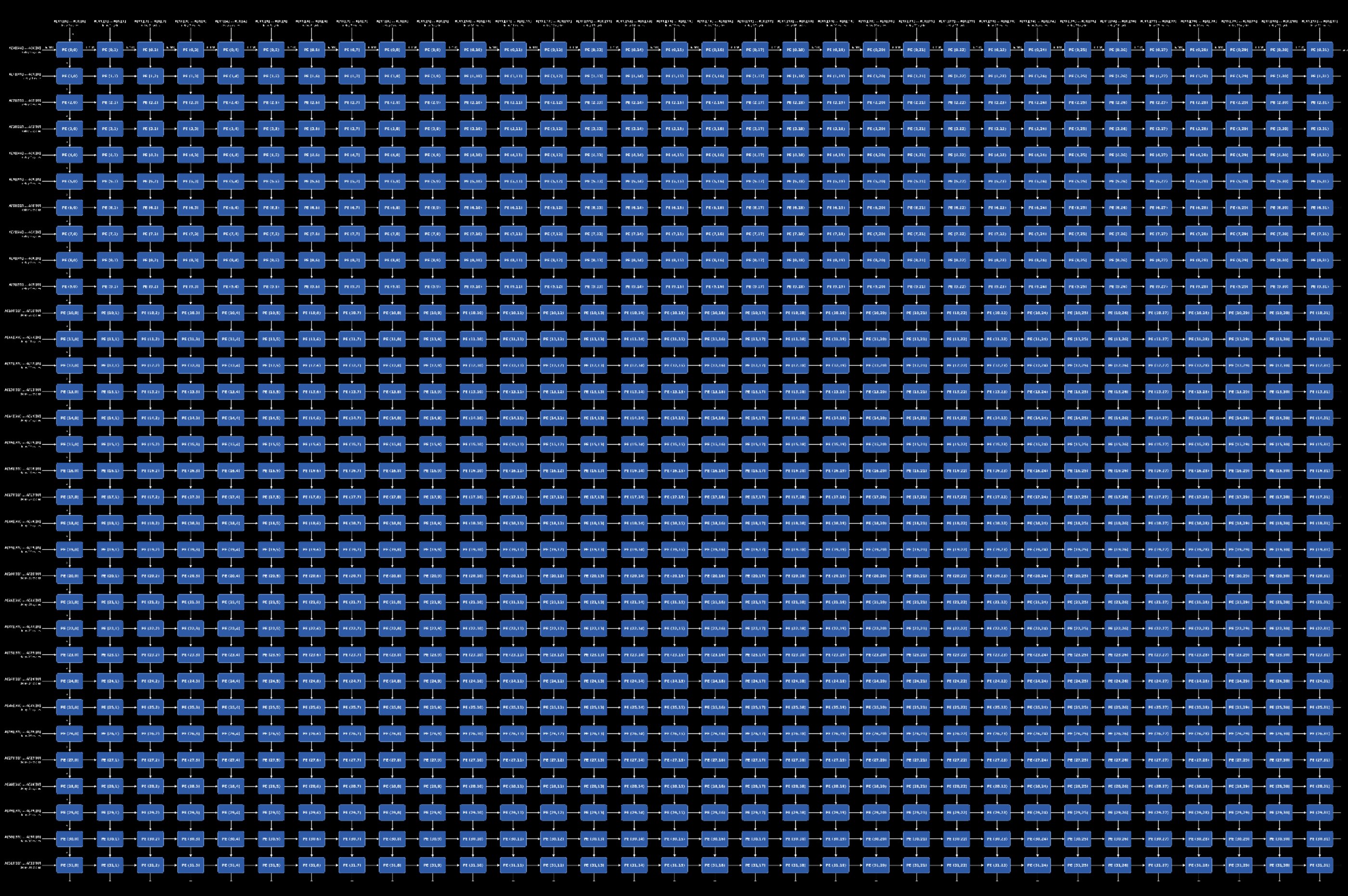
https://aristotle.harmonic.fun/projects/6f9facb7-678a-409e-98d3-d822c6c743ee
64x64
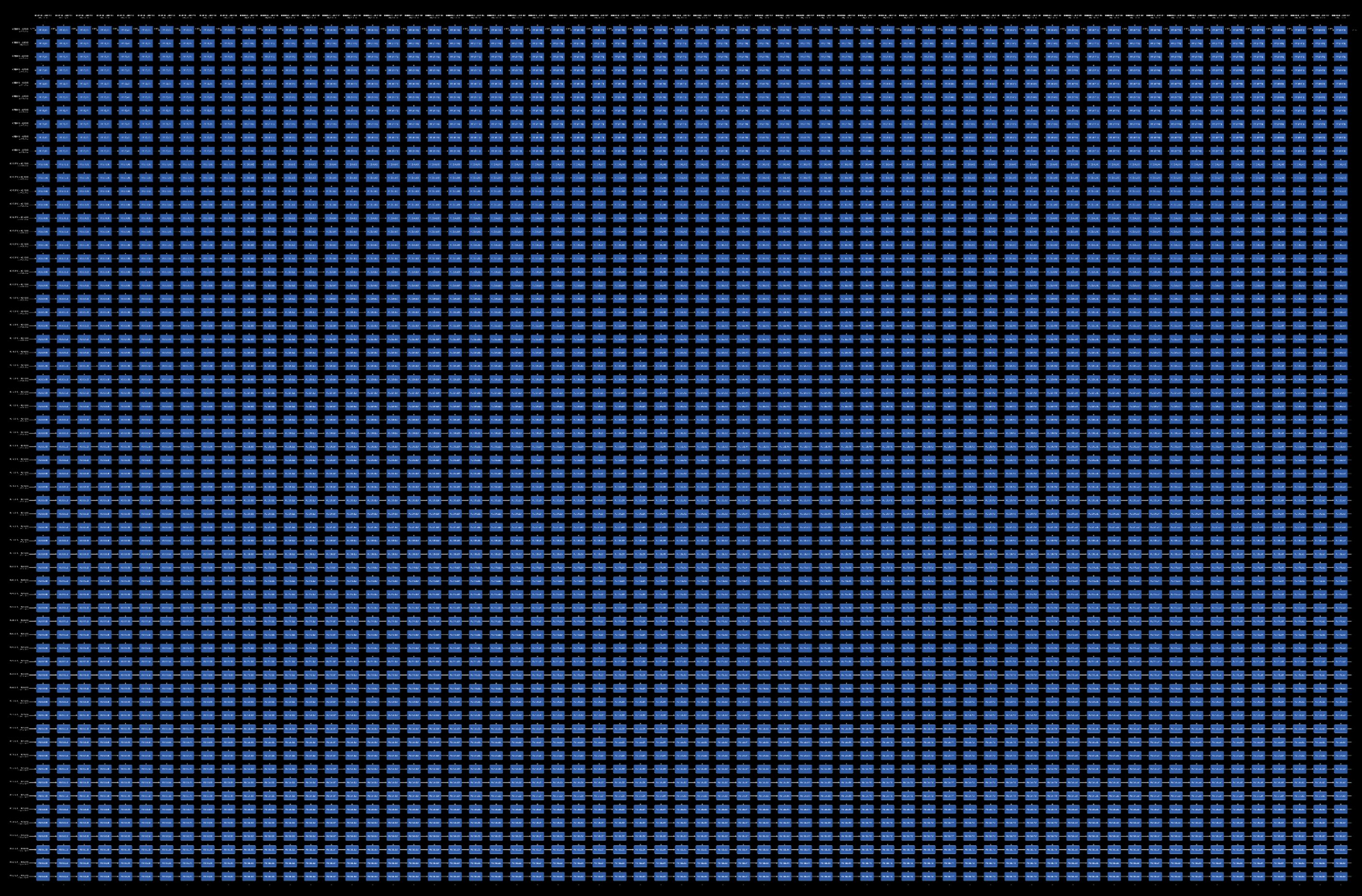
https://aristotle.harmonic.fun/projects/45d1b990-d499-484b-b456-e9a4113affda
Tap or click an image to open it at full resolution.
How the multipliers were produced and specified
The systolic array matrix multipliers were AI generated, along with tests. The process to produce them also involved mutation tests to break the implementation and make sure the correctness theorem no longer proves (to ensure the theorem connected the specification to the implementation).
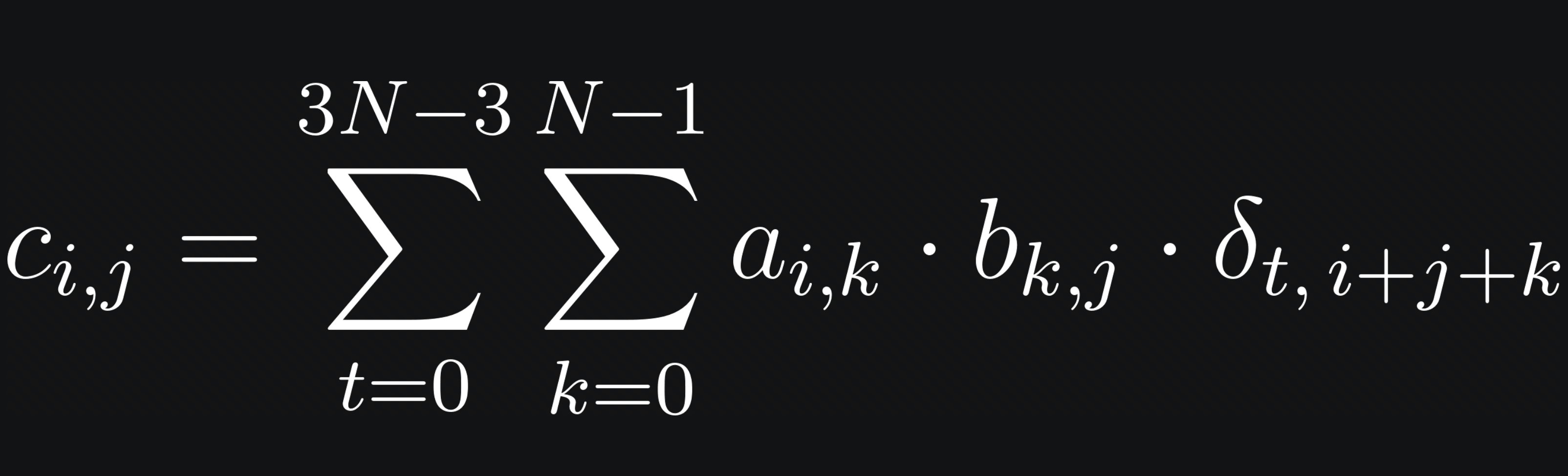
The SystemVerilog specification is a fairly direct transcription of the equation below, which captures the space/time pipelined behavior of the systolic array matrix multiplier (for the N=4 case):
This post was originally published as a thread on X.